





17 / December / 2025 : 20-32
A Sunday Reflection on Our National Anthem and the Armenian Apostolic Church. Lilia Shushanyan
 In a post shared on Facebook, Lilia Shushanyan writed, "In recent days, public discussion has arisen around the idea of playing the National Anthem of the Republic of Armenia in churches at 10:55 a.m., prior to the Divine Liturgy.
Personally, I have always been a consistent advocate for ensuring that Armenia’s state symbols—the Coat of Arms bearing Mount Ararat, the tricolor Flag, and the National Anthem—are visible and audible all appropriate places and on all appropriate occasions. This conviction has been felt particularly strongly when I witnessed the widespread, large-scale display of Turkish flags in Istanbul, contrasted with the often barely noticeable, and sometimes poorly maintained, Armenian flags in our own communities and schools.
On one occasion, I personally raised the issue of the proper display of the Armenian tricolor at a border checkpoint with colleagues at the Ministry of Foreign Affairs. And I can assure you—such examples are numerous. For this reason, I reserve the right to express an opinion: when discussing this topic, first of all one should be asked—at what scale, with what quality, and with what level of care—our state symbols are presented within state institutions and local self-government bodies. Only after addressing this should we move on to discussions of their application in other contexts.
Taking both the proposal and these considerations into account, a more appropriate and exemplary step would be for the National Anthem of the Republic of Armenia to be played every Thursday at 10:55 a.m., five minutes before the Government’s weekly session (which, in any case, begins standing). Such a practice would constitute not only a symbolic gesture, but also a clear institutional message from the highest executive authority regarding the value accorded to state symbols. I will even refrain, for now, from commenting on the absence of the anthem prior to sessions of the nationally elected Parliament.
Having clarified my unequivocally positive stance on ensuring the proper visibility of state symbols and on establishing clear priorities for its implementation, I would nevertheless prefer to focus not on the proposal itself, but rather on the rationale offered in its support—specifically, the assertion that “in 301 AD the Armenian Apostolic Church was created by the state, through a state decision.”
It is indeed true that in that year Armenia proclaimed Christianity as its state religion, while the Roman Empire, through the Edict of Milan in 313, merely recognized Christianity as a “tolerated religion.” Yet we must not overlook the fact that it is not by chance that it is called the Armenian Apostolic Church—for it rightfully traces its origins to the preaching of the Holy Apostles and the uninterrupted succession of their followers.
As Abel Archbishop Mkhitaryants explains in "History of the Congregations of the Armenian Church, with its Statute" the term “church” denotes the very foundation of faith, rather than a structure “built of stone and wood.” St. Orbelian reports that the apostle Bartholomew preached in Vordvat (present-day Ordubad is in Nakhichevan), Arevik, Bagh and Goghtn, “appointing an overseer for them”. He further notes that Bartholomew ordained one of his disciples, named Kumsi, as bishop, entrusted him to the Holy Spirit, and then proceeded to the district of Vanand. Information regarding bishops in Artaz prior to the time of the Gregory Illuminator is also confirmed in other sources, which we will not discuss now.
Thus, the Catholicosal See in Armenia represented the organic continuation of the Apostles Thaddeus and Bartholomew, their successors, early preachers, bishops, and nearly 250 years of devoted Christian life and teaching. One of the most prominent historians of the Armenian Church, Maghakia Archbishop Ormanian, placed particular emphasis on preserving and transmitting the facts of Christianity’s establishment in Armenia during the first three centuries, in order to demonstrate an uninterrupted historical continuity. In his “Azgapatum”, he noted that "The tendency of many to deny the Armenian Apostolic Church and Armenian Apostolic Christianity is not unknown," so he has written all relevant preserved testimonies in his book. He observed that while early national chroniclers spoke extensively about the beginnings (apostles), they did not sufficiently address the issue of continuity—yet this was necessary to refute the notion that Armenian apostolic preaching had been erased and replaced entirely by a new beginning under Gregory the Illuminator. As Ormanian memorably remarked, “even the most deeply rooted tree cannot sprout anew 200 or 250 years after its trunk has been cut”.
Indeed, Armenian Apostolic Christianity emerged in the first century. In 301 AD, under the prudent leadership of King Tiridates III, it was formally proclaimed the state religion by a nationwide council, with the establishment of the Catholicosate—who was subsequently ordained in Caesarea. This prudence lay in the recognition that Christianity, already widespread, offered the state a powerful force for unity, as well as an additional pillar of political independence and national identity vis-à-vis both still pagan Rome and Zoroastrian Persia.
Accordingly, in 301 AD, an already established Armenian Apostolic Church and Armenian Apostolic Christianity was nationalized and institutionalized—precisely because the state itself needs that. Moreover, from that moment onward, the Armenian Apostolic Church continued its seventeen-century uninterrupted existence, largely in the absence of Armenian statehood and even without the status of a state religion. Throughout these centuries, it preserved the Armenian people, culture, and identity, carrying the nation forward to the threshold of renewed statehood.
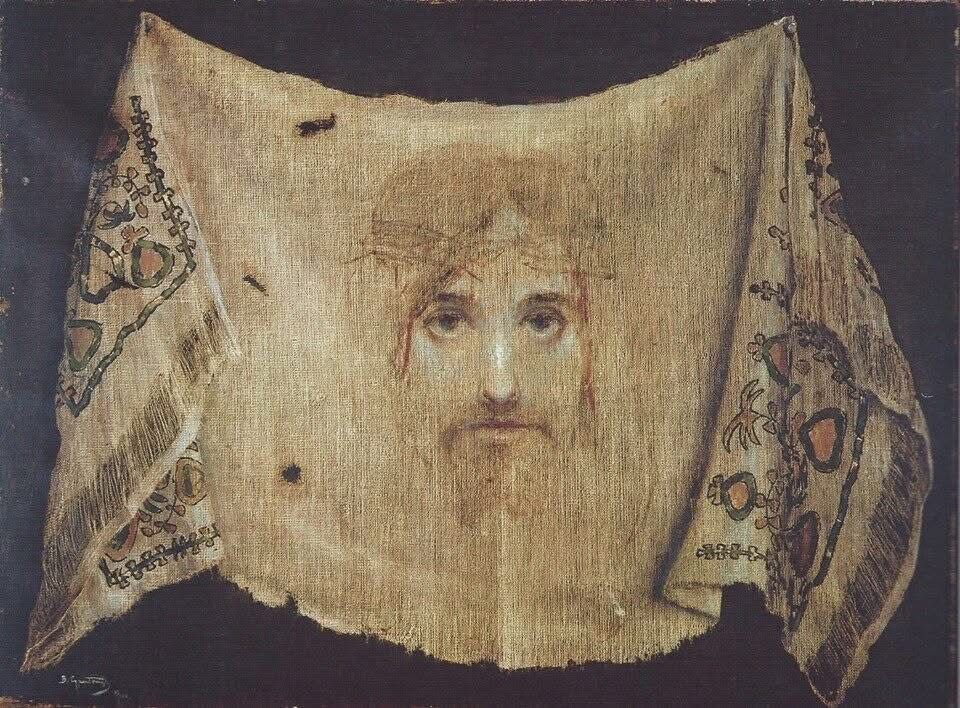
Postscript. It was a valuable opportunity to revisit the history of my faith and refresh my own memory. The image accompanying this text is one of my favorite works by Surenyants: “The Face of Christ (Mandylion).”
Viewed
1239times
Recommended
05 / June / 2020
Why Do People complain about Gov. Gavin Newsom's Adult Health Day Care and the decision to close...
Most of Adult live at home with a family member or close friend and caregiver. They arrive by family car, by bus or a Paratransit bus. They all have cognitive or physical disabilities that would...
09 / December / 2021
Aniv Ride: Flexible Micro-mobility Sharing Platform And More
Nowadays, with the whole world struggling against “gigantism” in urban transportation, shared micro-mobility is another hot point of discussion. The rapid growth of population and the existing...
08 / April / 2023
Each postage stamp has a nominal value of 400 AMD
Each postage stamp has a nominal value of 400 AMD. One of the stamps depicts the portrait of Ana Aslan, a famous Romanian doctor of Armenian origin, scientist, founder of the world's first...
11 / April / 2023
According to Samvel Shahramanyan, the head of Khnapat village, the entire area between Khnapat...
According to Samvel Shahramanyan, the head of Khnapat village, the entire area between Khnapat and Khramort villages, 142 hectares, remain completely uncultivated, because agricultural machinery...
12 / April / 2023
The Ministry reports that the two discussed a wide range of issues related to Armenian-American...
The Ministry reports that the two discussed a wide range of issues related to Armenian-American cooperation in the economic field:– expansion of economic interaction,– activation and...
13 / April / 2023
Mher Grigoryan, US Deputy Assistant Secretary of State discuss security issues in Armenia, region
Mher Grigoryan, the Deputy Prime Minister of Armenia, on Tuesday met with Erika Olson, the US Deputy Assistant Secretary of State, and Louis Bono, the OSCE Minsk Group US Co-Chair and Senior...
15 / April / 2023
US Ambassador to Armenia Kristina Kvien enjoyed tasting delicious Armenian cheeses from Syunik...
US Ambassador to Armenia Kristina Kvien enjoyed tasting delicious Armenian cheeses from Syunik region produced by local producer Borisovka. The Ambassador looks forward to exploring Armenia's...
17 / April / 2023
Armenia plans to participate in 2 other US-led military exercises in Europe
The Ministry of Defense of Armenia plans to participate in two other military exercises organized by the US Ground Forces Command in Europe this year: ‘Kosovo Forces’ and ‘Saber Junction’, said the...